From July 31 to August 8, 2025, Sister Veronica participated in the First National Conference of Indigenous Women and in the Fourth March of Indigenous Women, held in Brasilia (DF), accompanied by eight indigenous women from the Iny, Kanela and Xavante peoples of Araguaia.
The event, whose motto was Our body, our territory: we are guardians of the planet, brought together multiple dimensions of reflection and action: the relationship of women with the land, biomes and ancestralities; participation in spaces of power; political dialogues and organizational processes; discussion of the central guidelines of COP30; collective definitions and agreements; the formation of an ancestral jury; the presentation of indigenous women’s organizations; and testimonies on situations of violence, such as sexual abuse, femicide and irregular adoptions of children. There were also cultural and artistic activities, rituals of arrival and sacred chants of empowerment, prayers, dances, greetings from the peoples and activities in the Territory of Good Living, focused on “the seeds of the earth and the call of the ancestral women“. The Bancada del Cocar was also actively present.
The meeting took place in the Parque da Cidade Sarah Kubitschek, between August 2 and 8, with an estimated participation of 6,000 indigenous women from the seven Brazilian biomes: Pantanal, Amazon, Caatinga, Cerrado, Pampa, Mata Atlântica and Zona Costera-Marina. On August 7, in the morning hours, a rally was held for the March to the National Congress.
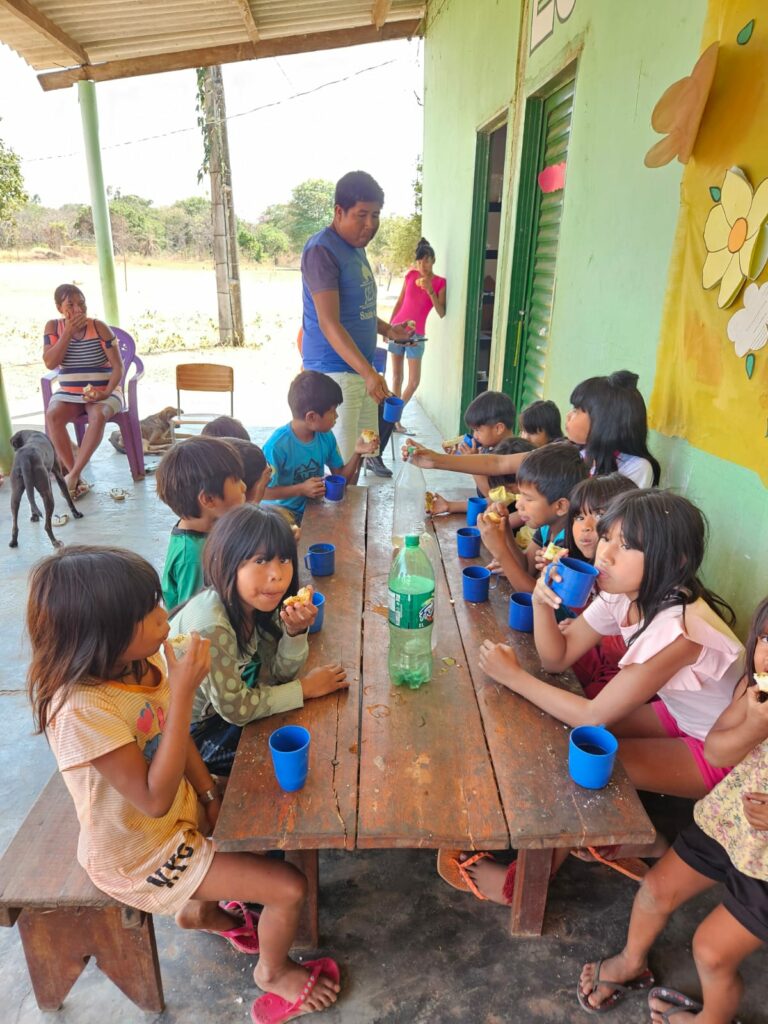
The event also included community visits. On August 8, in the village of Teribré, there was a reflection on the care of children, which included the weighing and measuring of seven children between the ages of 0 and 6, concluding with a community snack. Later, on September 9, a visit was made to the village of São Domingos, together with the coordinator of the Prelature’s Pastoral da Criança. There we accompanied families with small children and pregnant mothers, together with the local leaders responsible for this mission in the community.
H. Veronica Terezinha Hergesell, ccv