Colegio El Carmelo experienced a formative day dedicated to mental health, integrating spirituality, self-care and wellness practices. A space to heal together and strengthen those who accompany our students.
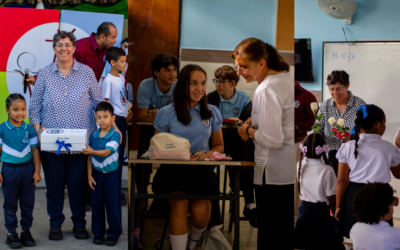
On November 20, the staff of El Colegio El Carmelo School in Caracas, Venezuela, gathered to participate in the November Training Meeting, dedicated entirely to mental health. The day integrated spirituality, emotions and bodily practices, reaffirming that taking care of ourselves is not a privilege, but a shared responsibility.
The morning began with a healing mass presided by Father Nelson Romero, who recalled that mental health cannot be separated from spiritual health. “Many times we ask God to dwell in us, but we close the door with anxiety, resentment or hopelessness,” he said. Through anointing with balsamic oil and sprinkling of holy water, each faculty and staff member was invited to surrender those thoughts that outweigh the backpacks we carry on a daily basis. Father Nelson stressed that the healing mass is not a magical act, but a space to recognize fragility, open ourselves to forgiveness and let hope -according to the Christian faith- renew our inner strength. “Healing the mind,” he concluded, “begins by recognizing that we need to be loved and that, sometimes, the first love that breaks is the one we have for ourselves.
After the Eucharist, Maria Flores, founder of the Amigos del Adolescente Foundation, gave a workshop on “Caring for the caregiver”. She explained that teachers often face high levels of stress and that the burnoutsyndrome progresses when the body’s signals are ignored. “Mental health is not a luxury; it is an ethical necessity. An overwhelmed adult can hardly provide containment to an adolescent in crisis,” he said.
Through mind-body integration dynamics and conscious breathing exercises, participants learned how a simple deep breath can lower the heart rate and clear the mind. The specialist closed by inviting us to “filter” what we consume: “What you listen to before you go to sleep and what you see when you wake up shapes your brain chemistry. Protect your mind as you protect your classroom”.
The meeting left a shared conviction: mental health is a collective good. When the adult is well, the student perceives it; and when the community cares for those it cares for, the school environment becomes a true formative space.
Candy Rodríguez Socas, Communication