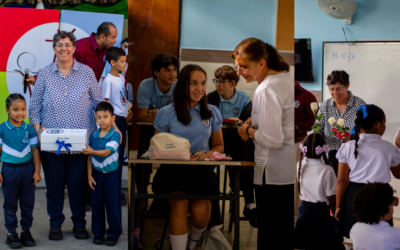
On the morning of July 5, we conducted pedagogical and pastoral training with 80 teachers from Santa Cruz College – Maringá, Brazil, and two representatives from the Vedruna Assistance Center of Campinas.
We began with the opening by the director Tânia, who after welcoming everyone, spoke to us about the Vedruna Charismatic Family in the American continent and the road traveled regarding synodality in the Congregation.

We then moved on to the educational meeting, which was divided into three parts: Introduction, synodality, the document Born Again and conclusion with the creation of a logo.
A moment of prayer gave way to the first part. We used the method of “hermeneutics of the Imagination” with the teachers, based on the biblical text of the disciples of Emmaus (Lk 24:13-45), we emphasized the importance of listening, knowing how to interpret the signs of God at our side through mutual accompaniment; the road to travel, with the awareness that we never walk alone. It was also emphasized the announcement, to take this experience to the daily reality of the teachers, after the experience of the encounter with God and with the other.
Once this moment was over, the theme was presented starting from the concept of “synodality” that each person has, affirming how synodality is not only an invitation of the Catholic Church, but a model to follow for society because it helps us to know how to listen, accompany and be accompanied. We ended this second moment with a group work based on the questions: how to be synodal in the family, in our school, and how is our active listening … among others.


The third moment was centered on the chapter document Born Again. We focused on the life that germinates, blossoms and is cared for. For this third part, we invited Sr. Marilene -religious-, Priscila -social worker- and Daniela -Physical Education teacher and member of the Joy Therapy group- to give testimonies about their experiences in the work environment where they lived the process of personal encounter with Jesus, which made them accept the mission they have, how they made the process of conversion and how they continue to care for the mission they exercise. For the teachers, it was also a moment to see that it is possible to be synodal in the concrete day-to-day activities.


We ended the formation with the creation of a logo with all the teachers and, for this, the symbols were distributed: Mount Carmel, village, road, trees and the theme Vedruna in synodality. Each group reflected with some questions on how to relate these symbols to the theme of the meeting.
What was created in the groups was shared and together we built the logo.
A shared lunch and a small plant as a souvenir of the meeting brought this training day to an end.
Sr. Maria Julia da Conceição, ccv